HOW IT WORKS
Water does the heating
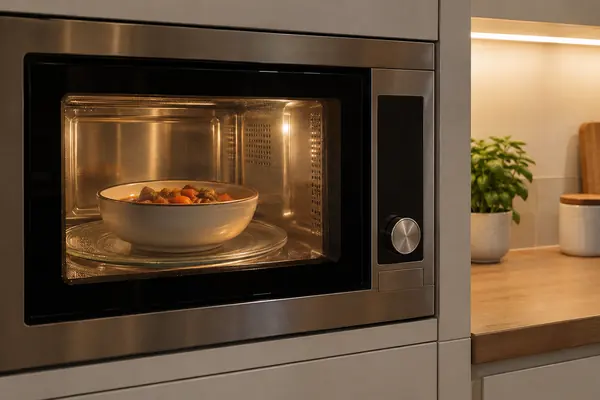
A magnetron makes microwaves that cause water molecules in food to vibrate, producing heat. Thick foods are cooked inside mainly by heat spreading from hot outer layers.
How a microwave works doodlezap
Start
WHAT THE GUIDANCE SAYS
A microwave heats fast, but not evenly.
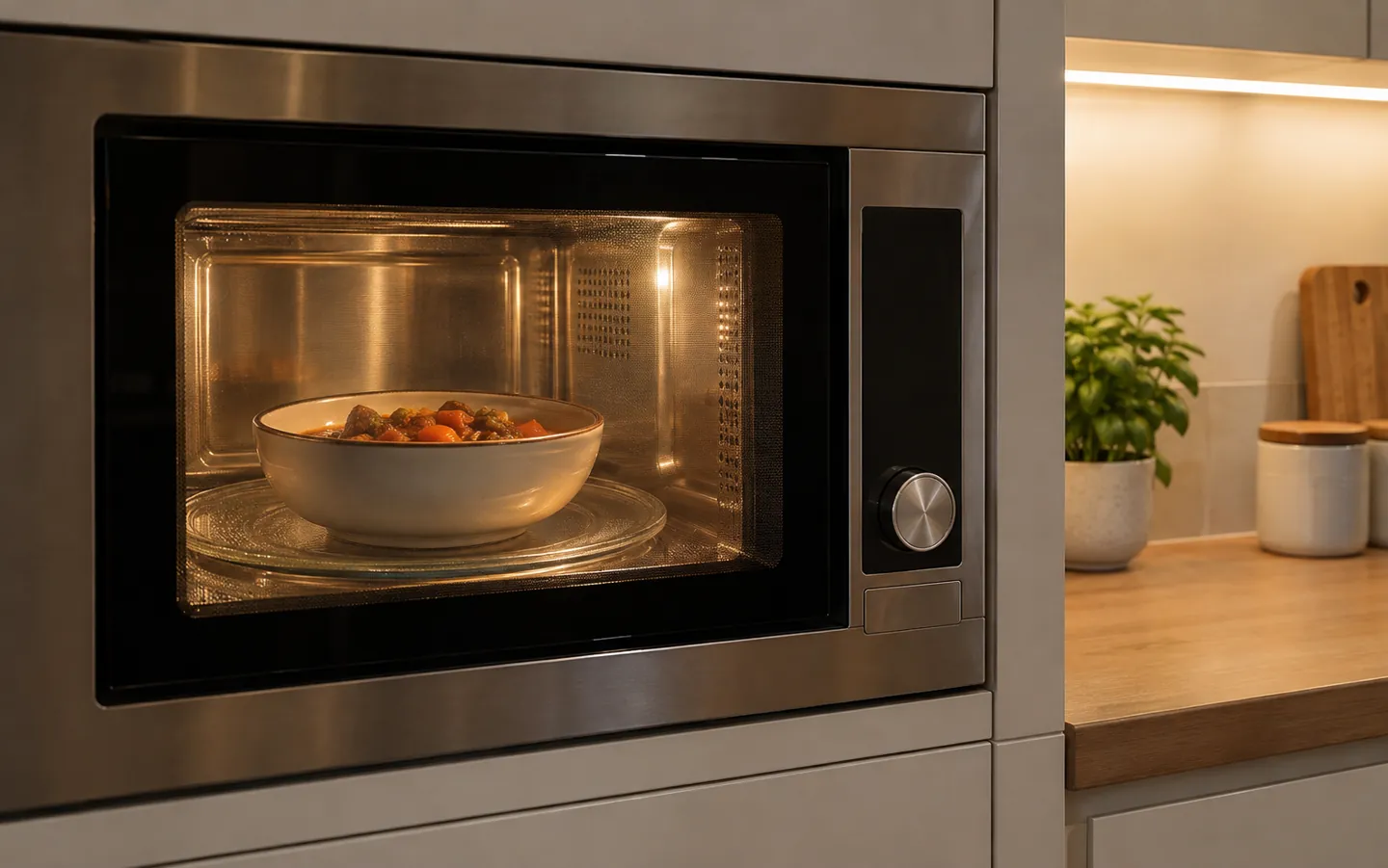
Microwaves make the water in food vibrate, and the heat spreads inwards from there. That is why official advice on reheating comes back to three habits: stir, stand, and make it steaming hot all the way through.
STEAMING HOTall the way through
Check what you are zappingKeep in mind
THE SHORT ANSWER
The Food Standards Agency says food should be steaming hot throughout,
because high temperatures kill bacteria that may be present.
HOW IT WORKS
A magnetron makes microwaves that cause water molecules in food to vibrate, producing heat. Thick foods are cooked inside mainly by heat spreading from hot outer layers.
How a microwave worksLEFTOVERS
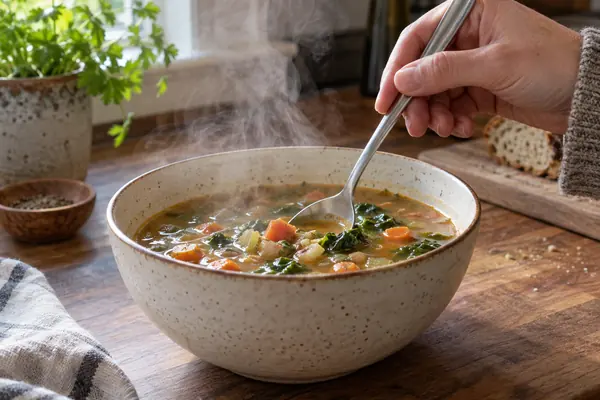
Microwaved food can be very hot at the edges and cold in the centre. The FSA says stirring helps, and standing is part of the cooking.
Check what you are zappingWATER
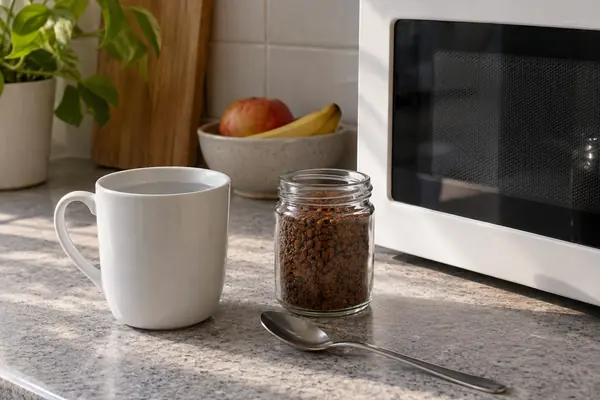
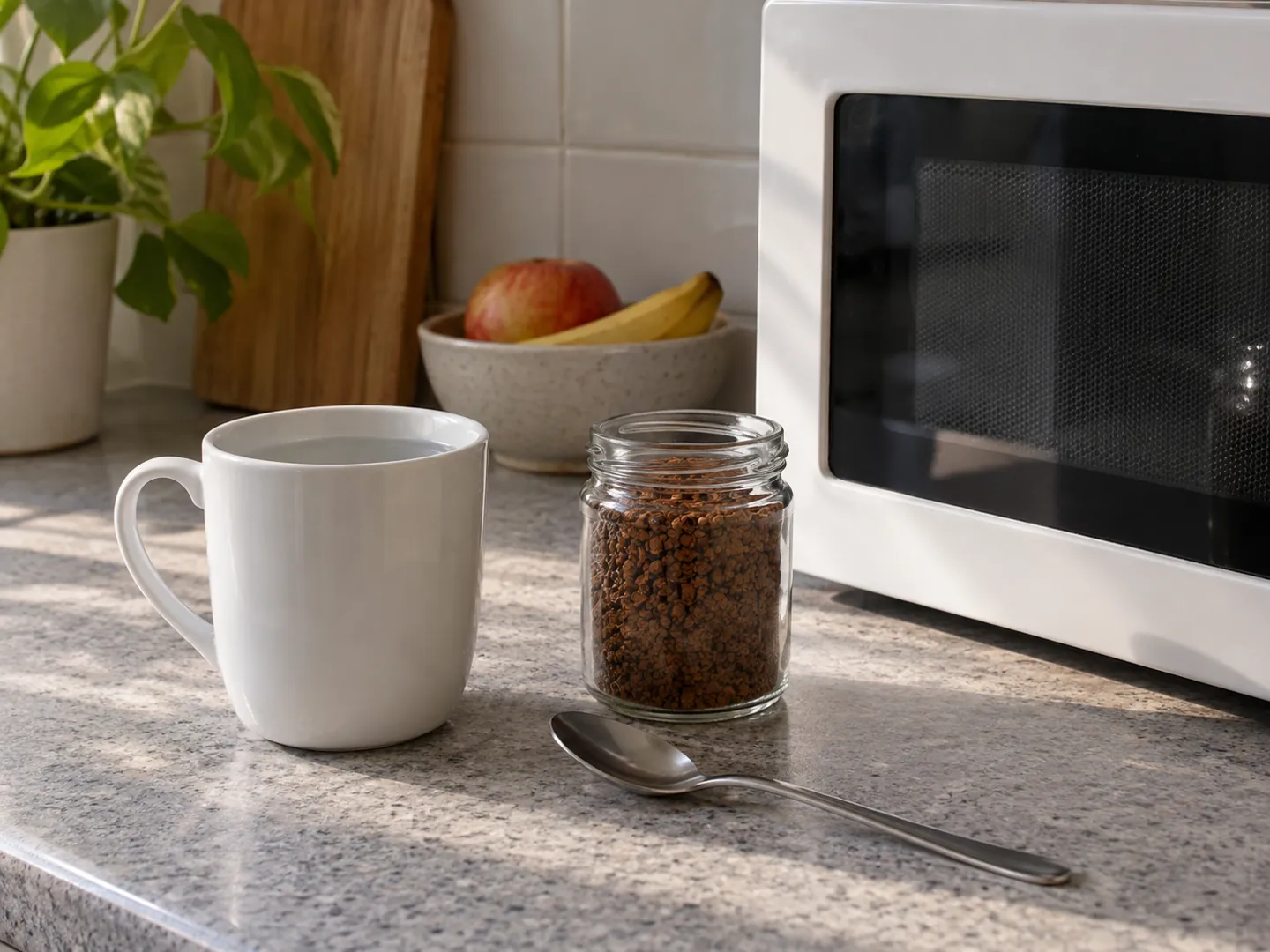
Plain water heated in a clean cup can pass boiling without bubbling, then erupt when moved. The FDA says adding coffee or sugar first greatly reduces the risk.
Safe habitsWHAT ARE YOU ZAPPING?
Choose what you are about to put in the microwave to see what UK and US guidance says. The bar shows how much extra care the guidance asks for.
Based on Food Standards Agency guidance published on GOV.UK and US FDA advice on microwave ovens. Always follow the food pack and your microwave's instructions.
TWO NUMBERS WORTH KNOWING
Two temperature figures from the Food Standards Agency's
guidance on cooking and reheating food at home.
70°C for 2 min
Temperature in the middle of the food, and for how long
The FSA says the middle of the food should reach 70°C for 2 minutes. Equivalent combinations include 75°C for 30 seconds and 80°C for 6 seconds.
COOKED THROUGH · FSA
8–63°C
Temperatures where bacteria may grow
Between 8°C and 63°C bacteria may grow and make you ill, which is why the FSA says to heat food until steaming hot throughout rather than just warm.
DANGER ZONE · FSA
The FSA says you should only ever reheat leftovers once, because repeatedly changing temperatures gives bacteria more chances to grow.
FOUR HABITS AT THE MICROWAVE
None of these needs special kit. They come straight from Food Standards Agency and FDA guidance.
Step 1
Microwaves can heat in pockets. Stirring or turning food helps prevent cold spots in the middle of a meal.
Step 2
The FSA says dishes like lasagne reheat more evenly in smaller portions, and small pieces of meat heat through better than large ones.
Step 3
Use microwave-safe cookware. The FDA says metal pans and foil generally should not be used, as they reflect microwaves and cause uneven cooking.
Step 4
The FDA advises not using a microwave if the door does not close firmly or is bent, warped or otherwise damaged.
HOW A MICROWAVE WORKS
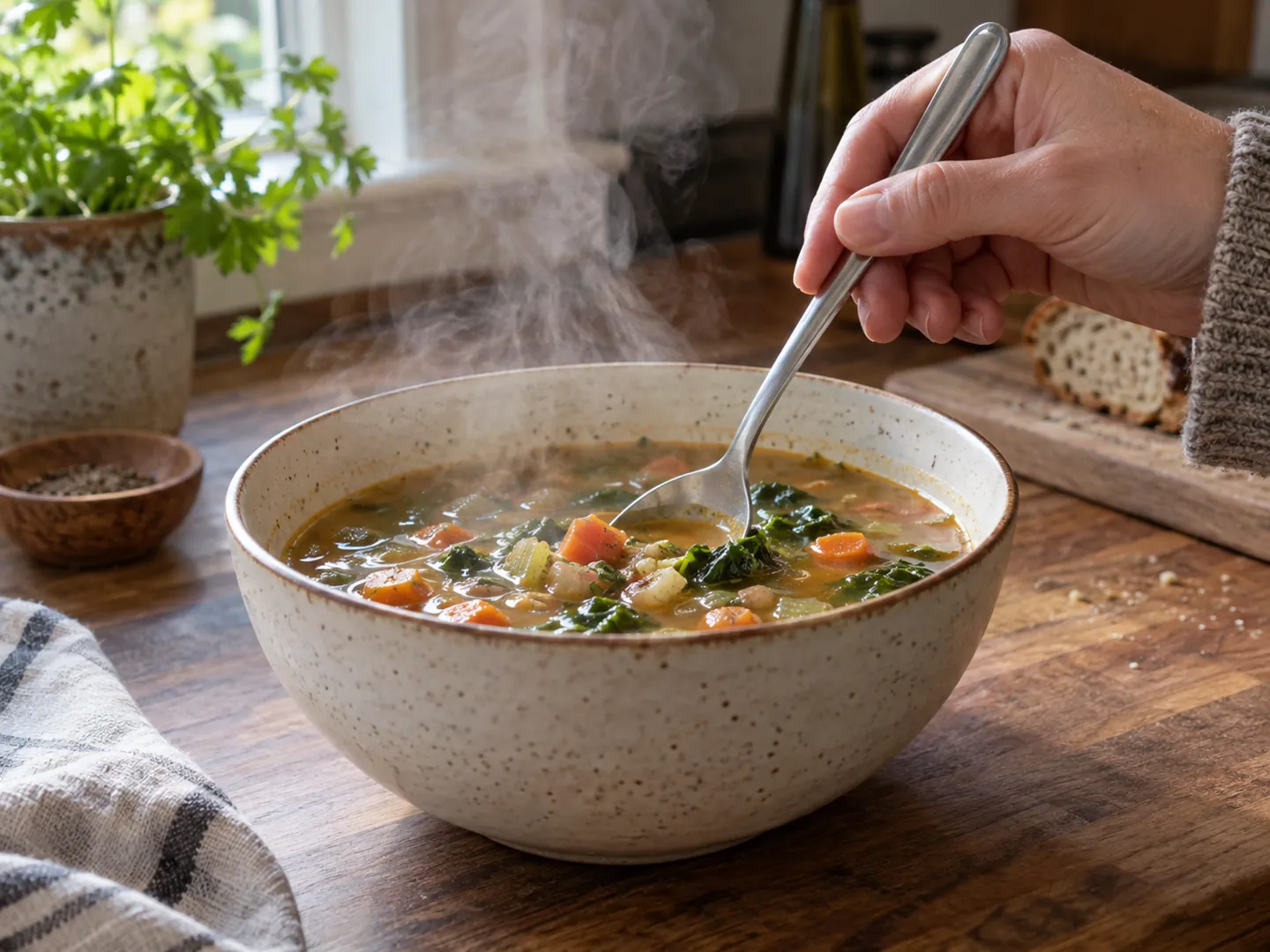
The FDA explains that microwaves are electromagnetic radiation similar to radio waves. They are reflected by metal, pass through glass, paper and plastic, and are absorbed by food. The metal walls keep them bouncing inside until the food takes them up as heat.
Microwaves are non-ionising and do not make food radioactive. The FDA limits leakage over an oven's lifetime to 5 milliwatts per square centimetre at about 2 inches from the surface, and every oven needs two independent interlocks that stop microwaves when the door opens.
Questions
No. The FDA says heat is produced in the food, but in thick foods the outer layers are heated mainly by microwaves while the inside cooks mainly by heat conducted from the hot outer layers.
Only once, according to the Food Standards Agency, because repeatedly changing the temperature gives bacteria more chances to grow. Heat them until steaming hot throughout.
Yes, once. The FSA says keep cooked rice in the fridge for no more than one day, never reheat it more than once and make sure it is steaming hot all the way through.
Microwaves can heat in pockets, so food can be very hot at the edges and still cold in the centre. The FSA recommends stirring or turning food and following standing times.
The FDA says microwave cooking does not reduce nutritional value any more than conventional cooking, and food may keep more vitamins and minerals because it cooks quickly without added water.
Destination
ABOUT THIS NAME
doodlezap.com is part of the DoodleSale portfolio. It isn't in an auction right now, but you can ask about leasing it.